When I finally woke, all I could see were the stark white curtains of a hospital room.
My skin burned with unbearable pain.
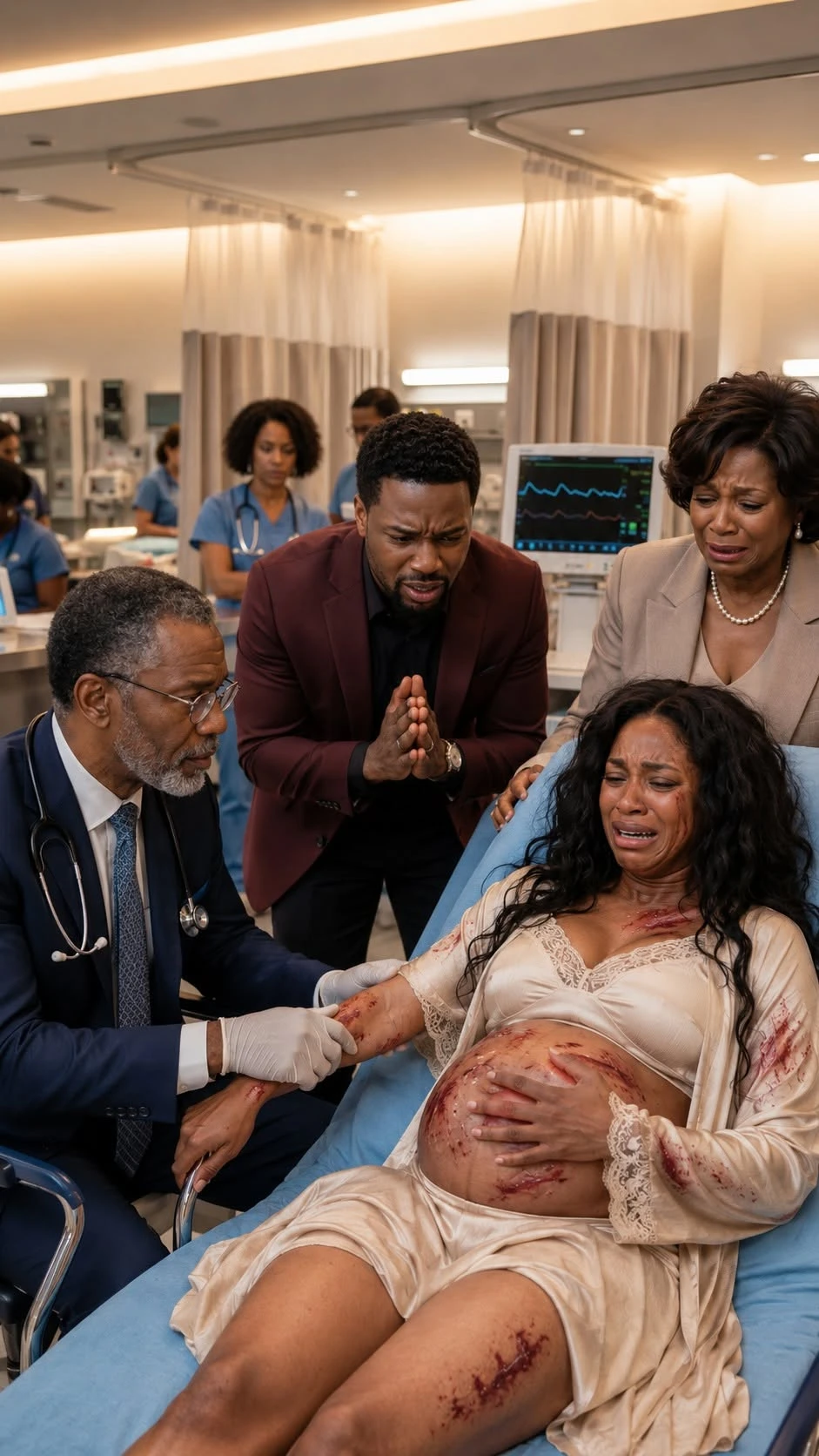
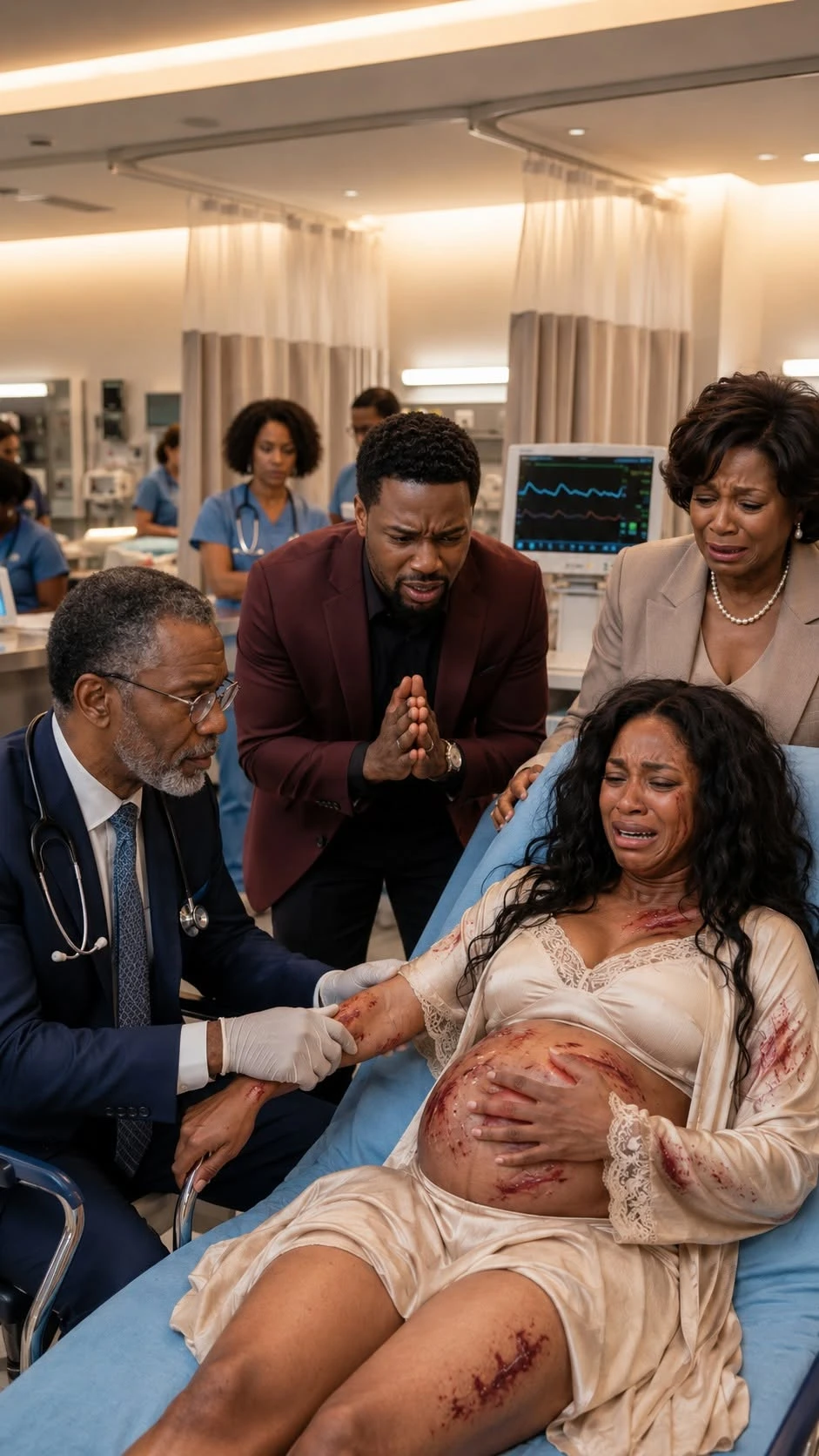
Not the sharp, clean pain of a cut or broken bone, but something deeper—something alive beneath the bandages, pulsing with every heartbeat. Even the air seemed to hurt. It brushed against the exposed edge of my neck like sandpaper, and when I tried to shift my shoulder, a bolt of fire ripped across my back so violently that I nearly screamed.
I didn’t.
I kept my eyes closed.
Beyond the thin curtain, Daniel—my supposedly perfect husband—was calmly explaining everything to the doctor.
“She has always been incredibly clumsy,” he said. “She spilled a pot of hot soup over herself.”
His voice was smooth.
Concerned.
Almost tender.
It was the same voice he used at charity dinners when he told people how difficult it was to care for a wife who suffered from “anxiety episodes.” The same voice he used with neighbors when he explained why I rarely attended parties anymore. The same voice that had once made me feel safe.
Now it made my stomach turn.
The doctor paused.
“A spilled pot caused such specific injuries across her back and shoulders?”
Daniel answered without hesitation.
“My wife panics easily. She probably twisted while falling.”
Vivian, my mother-in-law, immediately added a trembling sob.
“We warned her not to cook when she was exhausted. I told her to sit down, but she never listens.”
Her performance was almost beautiful.
The broken breath.
The little tremor.
The carefully timed sniff.
If I had not felt her fingers twist into my hair while she held me over the kitchen island, I might have believed her too.
I kept my breathing slow.
In.
Out.
In.
Out.
For three years, they had mistaken my silence for stupidity.
They had forgotten who I was before Daniel.
Before the isolation.
Before the pills he insisted I needed.
Before Vivian moved into our home “temporarily” and began controlling my meals, my clothes, my sleep, my phone calls, and eventually the shape of my days.
I had once been an attorney specializing in financial fraud.
I had built cases from discrepancies so small that other people overlooked them: a duplicate invoice, a signature pressed too firmly into paper, a wire transfer scheduled at an impossible hour, the wrong kind of toner on a supposedly old document.
I knew how criminals behaved when they believed they were smarter than everyone else.
They grew impatient.
They became careless.
And eventually, they began leaving proof in places they assumed no one would think to look.
Daniel and Vivian had made one fatal mistake.
They assumed marriage had erased me.
A soft tapping touched the inside of my wrist.
Once.
Twice.
Pause.
Three times.
May you like
They Raised a Glass to My Death on Day Ninety. I Came Downstairs Owning Their Future..105
My heart stuttered.
Dr. Lena Ortiz stepped closer to the bed.
Lena had been my college roommate, the woman who held my hair back after my first courtroom loss and slept on my apartment floor the night my father died because she refused to let grief swallow me alone.
She knew exactly what that signal meant.
Stay still.
You are not alone.
Then Lena turned toward Daniel, her voice so calm that the entire room fell silent.
“Before the police officers come upstairs,” she said, “perhaps you should explain why a hidden camera in your kitchen recorded everything.”
The silence that followed felt physical.
Heavy.
Absolute.
Even the machines seemed to hold their breath.
Daniel spoke first.
“What camera?”
For the first time, the polish in his voice cracked.
Only slightly.
But I heard it.
Lena heard it too.
Vivian’s chair scraped backward.
“I don’t understand,” she said.
Lena did not raise her voice.
“A camera concealed inside the smoke detector above the kitchen island. It transmitted footage to an encrypted cloud account. The file shows your daughter-in-law standing at the stove. It shows you approaching her from behind. It shows you lifting the pot.”
“That’s impossible,” Vivian whispered.
“It also recorded audio.”
The monitor beside my bed began beeping faster.
Not because I was frightened.
Because I remembered.
The heavy cast-iron pot.
The smell of garlic and rosemary.
The golden shimmer of oil trembling under the kitchen lights.
Vivian standing behind me in a cream silk blouse, her mouth pinched with contempt.
Daniel entering through the mudroom with rain on his shoulders and irritation already arranged across his face.
Dinner was six minutes late.
Six minutes.
That was all.
Vivian had looked at the clock above the pantry and said, “You had one responsibility.”
I had turned off the burner.
“Daniel texted that he would be late.”
“He changed his mind.”
“I’m plating it now.”
She stepped closer.
“You always have an excuse.”
Daniel entered then, took one look at the unfinished table, and sighed as though I had embarrassed him in front of a ballroom full of guests.
“My mother shouldn’t have to wait for dinner in my house.”
I stared at him.
For a moment, I saw the man I married superimposed over the man standing there.
The Daniel who once brought me coffee outside the courthouse at dawn.
The Daniel who read my father poetry at the hospice when my father could no longer open his eyes.
The Daniel who used to trace circles over my palm and say, “You never have to prove your worth to me.”
That man had disappeared so gradually I kept wondering whether he had ever existed.
“I said I’m plating it,” I replied.
Vivian’s eyes narrowed.
“You don’t speak to my son that way.”
“I’m speaking to my husband.”
She grabbed my wrist.
I pulled free.
That was when her face changed.
No more wounded mother.
No more refined widow.
Only rage.
Cold and entitled.
She seized the pot with both hands.
I saw the oil tilt.
I had time to understand what she intended.
Not enough time to escape.
“Next time,” Vivian hissed, “dinner will be ready before my son gets home.”
The oil struck my upper back and shoulders.
The world became white.
I screamed.
My knees hit the tile.
The smell came next, sickening and impossible, mingling with rosemary and roasted meat. My hands clawed for the counter, but the surface slipped beneath my fingers.
Daniel stepped toward me.
For one delirious second, I believed instinct had defeated cruelty. I believed he would drag me beneath cold water, call an ambulance, press a towel to my skin.
Instead, he looked down at his Italian leather shoes.
A few drops had splashed near the toe.
He stepped over my body, grabbed a linen napkin, and began wiping them away.
“Do you have any idea what these cost?” he snapped.
I lay shaking on the floor.
“Daniel…”
He glanced at his mother.
Vivian still held the empty pot.
Her face had gone pale, but not with regret.
With calculation.
“She slipped,” Vivian said.
Daniel looked at me.
Then at the smoke detector.
Then back at his mother.
“No,” he replied quietly. “She spilled soup on herself.”
That was the last thing I remembered before darkness closed over me.
Now, in the hospital, Daniel tried to laugh.
It sounded thin.
“This is absurd. There is no camera.”
Lena stepped toward the curtain.
“You should be careful about making statements you’ll later have to repeat under oath.”
“My wife installed a camera without my knowledge?”
“No.”
A man’s voice came from the doorway.
Low.
Controlled.
Familiar.
“She installed four.”
Daniel stopped breathing.
So did I.
Detective Marcus Vale walked into the room wearing a dark overcoat damp from the rain. I had not seen him in twelve years, but I recognized the steady weight of his steps before I saw his face.
Marcus had been an investigator in the state attorney general’s office when I was still prosecuting fraud cases. We had worked seventy-hour weeks together, surviving on burnt coffee and stubbornness. He had a scar across his left eyebrow from a car accident and an unnerving ability to remain silent until guilty people began confessing just to fill the space.
He was also the man who once asked me to marry him.
I had said no.
Three months later, I met Daniel.
Marcus’s gaze moved toward my bed, but he did not pull back the curtain. He respected the signal I had arranged in the emergency protocol.
If I was conscious, I would reveal it when safe.
If not, Lena would act.
Daniel found his voice.
“You can’t come into a hospital room and accuse my family based on some illegal recording.”
Marcus removed a small notebook from his coat.
“I haven’t accused anyone yet.”
“You implied—”
“I said there were four cameras.”
Vivian gripped the edge of her chair.
“Why would she do that?”
Marcus looked at her.
“Perhaps because someone had been replacing her medication.”
Vivian’s mouth opened.
Daniel’s face went blank.
A perfect blank.
Too perfect.
Marcus continued.
“Perhaps because bank documents bearing her signature were submitted on days when building access logs show she never entered the bank. Perhaps because her father’s trust received repeated requests for early dissolution, each one supported by medical declarations from a psychiatrist who says he never evaluated her.”
“That’s confidential financial information,” Daniel said.
“It was provided voluntarily by the trust’s legal protector.”
Daniel’s jaw tightened.
“My wife is emotionally unstable. She has been paranoid for months.”
“That may be what you told people.”
“It’s the truth.”
Marcus opened his notebook.
“Then you won’t mind explaining why you instructed your household staff to tell neighbors she had gone to a private recovery clinic during the same week security footage shows her locked inside the guest bedroom.”
Vivian looked at Daniel.
He did not look back.
The betrayal between them had begun.
Small.
Silent.
But I felt it moving through the room.
Lena touched my wrist again.
Once.
Safe.
I slowly opened my eyes.
At first, the light stabbed through me. The ceiling dissolved into a blur. Then Lena’s face appeared above mine, framed by dark curls and exhaustion.
Her eyes were wet.
But her hand was steady.
“Welcome back,” she whispered.
Daniel rushed toward the bed.
“Emma.”
The tenderness in his voice would have fooled anyone who had not seen him polish oil off his shoes while I burned.
He reached for my hand.
I moved my fingers away.
It was barely an inch.
But everyone saw.
Daniel froze.
Vivian began crying.
Not for me.
For herself.
“Emma, sweetheart, it was an accident,” she said. “You were tired. You must remember that.”
My throat felt torn and dry.
When I spoke, the sound was barely more than breath.
“I remember everything.”
Vivian’s tears stopped.
Daniel leaned closer.
“You’re confused from the medication.”
“No.”
“Emma, listen to me. You suffered a traumatic injury.”
“So did my smoke detector.”
Marcus lowered his head, hiding what might have been the beginning of a smile.
Daniel’s face hardened.
There he was.
The real man.
The one who emerged whenever charm failed.
“You don’t know what you’re doing,” he said quietly.
Lena stepped between us.
“She needs rest.”
Daniel ignored her.
“Emma, whatever you think you recorded, you need to understand context. My mother was helping you. You lost control of the pot.”
I stared at him.
Even through the pain, I felt strangely calm.
Maybe because I had spent so long fearing the moment he realized I no longer believed him.
Now it had come.
And I was still alive.
“Did you wipe your shoes before or after you called the ambulance?” I asked.
His mouth closed.
Marcus’s pen moved across the page.
Daniel looked toward the detective.
“I want an attorney.”
“You’re free to call one.”
“I’m also taking my wife home as soon as she’s discharged.”
“No,” Lena said.
Daniel turned on her.
“You don’t get to decide that.”
“As her attending physician, I decide whether she is medically safe to leave.”
“I’m her husband.”
“And she is my patient.”
Marcus stepped closer.
“There is also a temporary protective order being processed.”
Daniel laughed, but there was no humor in it.
“Based on a camera she illegally installed in our marital home?”
“The property is owned by her trust,” Marcus replied. “You were residing there under a revocable occupancy agreement.”
Daniel went still.
He had not known.
That pleased me more than it should have.
For years, he had walked through the marble halls of the Ashford estate as though generations of my family had built it for him.
He chose the artwork.
Changed the locks.
Removed my mother’s piano from the library because it did not match his renovation plans.
He hosted investors beneath my father’s portrait and introduced himself as the owner.
But the house had never been his.
Neither had the farmland in Connecticut.
The apartment in Boston.
The shares in Ashford Medical Systems.
Or the liquid reserve he had quietly begun borrowing against.
My father had been many things—difficult, proud, emotionally restrained—but careless was not one of them.
After my mother died, he rebuilt the family estate plan with the caution of a man who understood that wealth attracted affection shaped like hunger.
The trust was irrevocable.
I was the sole beneficiary.
And hidden behind the conventional trustees was a legal protector empowered to remove them, freeze transactions, and release evidence if coercion was suspected.
Daniel believed he had forced me to sign control away six months earlier.
He believed the papers on our dining room table gave him authority over the trust.
What he did not know was that I had noticed the page numbers.
One, two, three, five, six.
Page four was missing.
Fraud cases had taught me that missing pages mattered more than visible ones.
I signed only after switching the documents with copies I had prepared myself.
The papers Daniel carried to the bank granted him nothing.
The originals—complete with forged amendments and false medical certifications—were secured inside a vault.
Beside recordings.
Financial statements.
Photographs.
Medication samples.
And a sealed letter instructing Marcus exactly what to do if I was hospitalized under suspicious circumstances.
Daniel turned toward me.
“What have you done?”
I held his gaze.
“What you taught me to do.”
His brow furrowed.
“I protected myself.”
Two uniformed officers appeared at the doorway.
Vivian stood so abruptly that the chair toppled behind her.
“You cannot arrest me,” she said. “I am seventy-one years old.”
One officer glanced at Marcus.
Marcus closed his notebook.
“Age does not convert attempted murder into a misunderstanding.”
Vivian recoiled.
“Murder?”
“The footage shows you testing the oil temperature before lifting the pot.”
Her face collapsed.
Daniel spun toward her.
“You tested it?”
The question tore through the room.
Not Are you hurt?
Not Mother, what happened?
Not This is a mistake.
You tested it?
He was already separating himself from her.
Vivian heard it too.
Her expression changed from fear to disbelief.
“You told me to teach her a lesson.”
Daniel’s head snapped around.
“Do not say another word.”
“You said she needed to be frightened.”
“I said no such thing.”
“You said if she became incompetent, you could control the trust!”
Daniel lunged toward her.
The officers stepped between them.
Vivian began to shake.
“You told me the oil would only scar her.”
The room seemed to tilt.
Lena gripped the bedrail.
Marcus’s face hardened into stone.
Daniel looked at his mother with naked hatred.
“Shut up.”
Vivian stared at him.
A mother finally seeing the son she had raised.
Not the polished executive.
Not the obedient prince.
Not the man whose every cruelty she excused as ambition.
A coward.
One who would feed her to the law if it saved him.
“You planned this,” she whispered.
Daniel turned toward the officers.
“She’s confused. She has memory problems.”
Vivian slapped him.
The sound cracked across the room.
One of the officers caught her wrist before she could strike again.
“You said you would protect me!” she screamed.
Daniel wiped a smear of blood from his lower lip.
“You spilled oil on my wife.”
“You held her phone!”
“You’re insane.”
“You deleted the first recording!”
Daniel’s face changed.
Marcus took one step forward.
“The first recording?”
Vivian realized too late what she had said.
Daniel closed his eyes.
For a moment, no one moved.
Then Marcus nodded to the officers.
“Separate them.”
Vivian began shouting as they escorted her into the corridor.
“He knew! He knew everything! Ask him about the basement office! Ask him about the woman at the bank!”
Daniel remained beside the overturned chair.
His expensive navy suit was wrinkled now. His hair had fallen across his forehead. The mask was gone.
But he still had one weapon left.
He looked at me with an intimacy so precise it felt obscene.
“Emma,” he said softly, “tell them to stop.”
I stared at him.
“We can fix this.”
“No.”
“You’re in pain. You’re angry.”
“I’m awake.”
His eyes flickered.
“We loved each other.”
I thought of the first winter we spent together.
A tiny rented cabin in Vermont.
Snow against the windows.
Daniel burning pancakes and laughing as the smoke alarm screamed.
He had danced with me barefoot on the kitchen tiles while my father’s old jazz records played from his phone.
I had loved him.
Not cautiously.
Not intelligently.
Completely.
That was the wound beneath all the others.
The skin could heal.
The scars could soften.
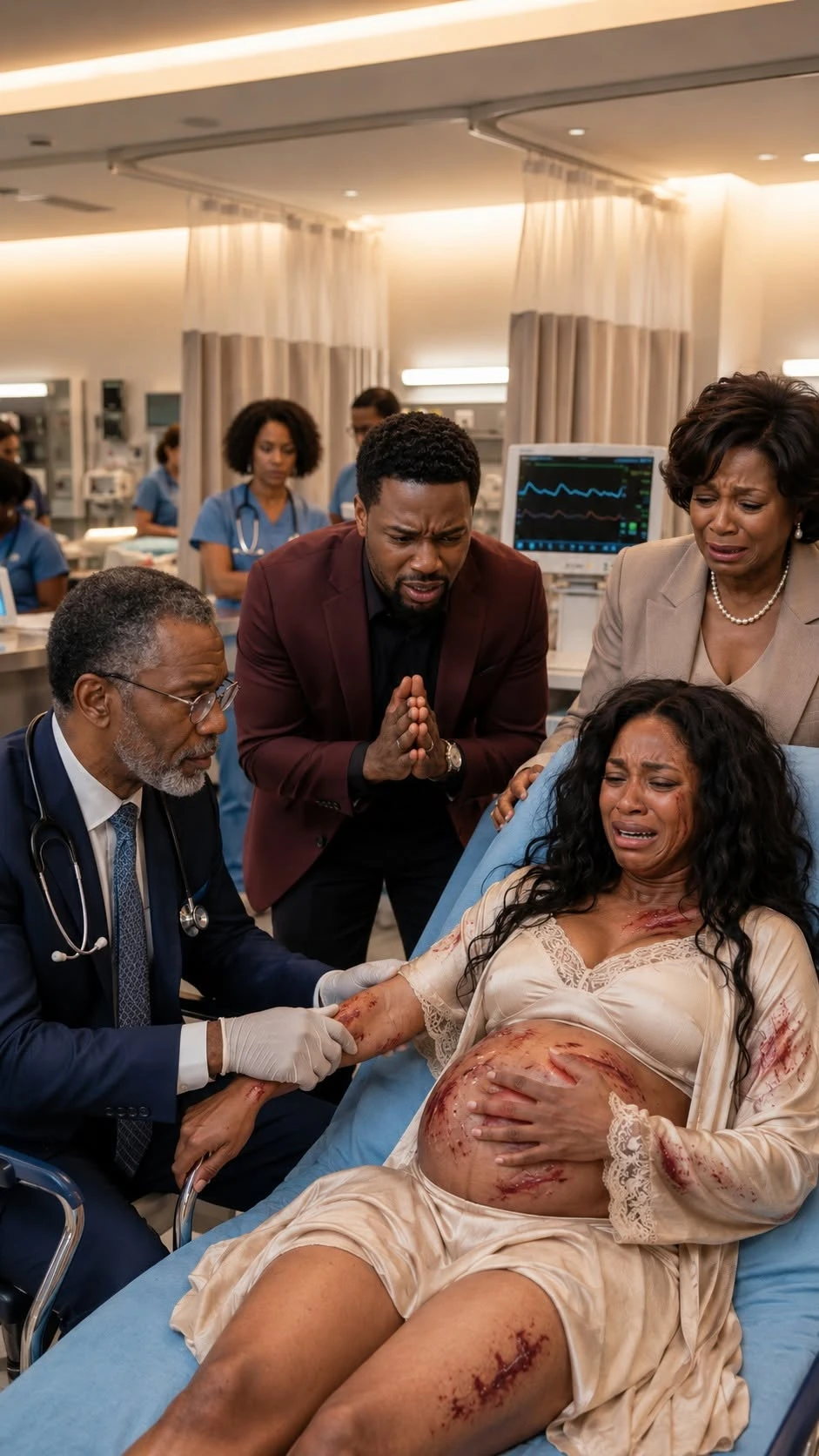
But somewhere inside me lived the woman who had once trusted him enough to sleep beside him with her back exposed.
“I loved who you pretended to be,” I whispered.
His face twisted.
“You think that detective cares about you? He’s been waiting for this. He always wanted me gone.”
Marcus did not react.
Daniel continued.
“He resented our marriage. He resented me.”
“Marcus hasn’t spoken to me in years.”
“But you contacted him.”
“I prepared an emergency file.”
“You contacted him.”
“I contacted the only investigator I knew who couldn’t be bought.”
That struck him.
I saw it.
A flare of rage.
Then fear.
Marcus gestured toward the door.
“Mr. Mercer, you need to step outside.”
Daniel’s eyes remained locked on mine.
“You have no idea what you’re destroying.”
“My life was not yours to destroy first.”
He stepped closer.
One officer reached for his arm.
Daniel jerked away.
“You want the truth?” he snapped. “Without me, you would still be living in your father’s shadow, prosecuting petty thieves for a government salary. I made people respect you.”
“You made people pity me.”
“I gave you a life.”
“You gave me a cage.”
His voice dropped.
“And you stayed.”
The words landed exactly where he intended.
For years, that question had kept me silent.
Why did you stay?
Strong women were supposed to recognize abuse immediately.
Attorneys were supposed to understand coercion.
Intelligent people were supposed to leave before the locks changed, before the accounts disappeared, before the first shove.
But abuse did not arrive carrying a sign.
It came with soup when you were sick.
Flowers after an insult.
An apology shaped like childhood trauma.
A husband who took over one bill because you were grieving, then another because you were tired, then all of them because he claimed it was easier.
It came slowly enough that each surrender felt temporary.
By the time you understood the architecture of the prison, you were standing inside it, ashamed that you had helped build the walls.
I looked at Daniel.
“Yes,” I said. “I stayed.”
Triumph flickered in his eyes.
“Because I needed time to prove what you were doing.”
The triumph vanished.
Marcus opened the door.
“Take him downstairs.”
The officer reached for Daniel.
This time he did not resist.
At the threshold, he glanced back.
There was no love in his face.
Only promise.
This was not over.
I knew him well enough to understand.
And somewhere beneath the morphine, beneath the agony, beneath the relief of survival, I felt the old instincts of the fraud attorney awaken fully.
He still believed he had an exit.
My job was to find it before he used it.
The next several days passed in fragments.
Bandage changes.
Medication.
The soft squeak of nurses’ shoes.
Rain tapping the window after midnight.
There were moments when pain reduced the world to a single breath. Moments when I could not imagine inhabiting my own body for another minute.
Lena was there for most of them.
She never offered empty reassurance.
She did not tell me I was lucky.
She did not promise the scars would disappear.
She sat beside me while I shook and said, “I know.”
Sometimes those were the only words that did not feel like a lie.
On the third night, I woke to find Marcus standing at the window.
He had removed his coat and loosened his tie. City lights reflected faintly in the glass.
“You always hated hospitals,” I murmured.
He turned.
“You remember that?”
“You broke your wrist during the Halpern raid and tried to interrogate a suspect before getting an X-ray.”
“It was a productive twenty minutes.”
“You fainted.”
“I sat down quickly.”
Despite everything, I smiled.
It pulled at the skin near my shoulder, and the smile vanished into a wince.
Marcus moved closer but stopped beside the chair.
He did not touch me.
I was grateful.
“What did you find?” I asked.
His expression grew serious.
“The assault footage is clear. Vivian has been charged. Daniel is claiming he arrived after it happened and believed her version.”
“He was there.”
“The angle shows his lower body, but his face is out of frame during the first thirty seconds.”
“He stepped over me.”
“That part is visible.”
“Then why isn’t he charged?”
“He is being held on financial fraud, evidence tampering, unlawful restraint, and conspiracy-related counts. The prosecutor is reviewing the assault.”
“Vivian said he planned it.”
“Her credibility will be attacked.”
“She knows about another recording.”
Marcus nodded.
“Someone accessed the camera network two weeks ago and deleted a file from the local server.”
“Daniel.”
“Possibly.”
“What was on it?”
“We recovered fragments. No audio yet. It appears to show Daniel meeting someone in the kitchen after midnight.”
“The woman from the bank?”
“Maybe.”
I stared at the ceiling.
The bank.
For months, Daniel had cultivated a private relationship with Claire Whitmore, a senior trust officer who handled several Ashford accounts. He said their late-night calls concerned interest rates and tax strategy.
I had heard enough hidden conversations to know intimacy did not always sound romantic.
Sometimes it sounded like numbers.
Account codes.
Deadlines.
Promises.
“What about the forged medical declarations?” I asked.
“The psychiatrist’s signature was copied from an insurance form. He never examined you.”
“And Claire?”
“She took emergency leave yesterday.”
My heart tightened.
“Where did she go?”
“No one knows.”
Daniel had an exit.
Claire was part of it.
“Freeze the offshore accounts.”
“We did.”
“All of them?”
Marcus hesitated.
That was answer enough.
“What are you not telling me?”
He sat down.
“Three weeks ago, forty-two million dollars moved through a series of short-term commercial loans tied to shell companies.”
“From the trust?”
“Not directly. From Ashford Medical Systems.”
I turned my head toward him.
“That requires board approval.”
“The board documents contain your electronic authorization.”
“I never approved it.”
“I know.”
“Where did the money go?”
“Most of it vanished through entities in Cyprus, Malta, and Singapore. But six million was transferred to a domestic foundation.”
“What foundation?”
He watched me carefully.
“The Eleanor Ashford Children’s Relief Fund.”
My mother’s foundation.
The one my father created after she died.
It funded burn units, pediatric surgeries, and housing for families whose children needed long-term treatment.
Daniel had used my mother’s name to steal.
The rage came so suddenly I forgot the pain.
“Shut it down.”
“We can’t yet. The foundation account contains legitimate donations mixed with transferred funds. If we move too quickly, innocent programs could be frozen.”
“He used sick children as camouflage.”
“Yes.”
I closed my eyes.
Marcus leaned forward.
“Emma, there’s more.”
“Tell me.”
“Daniel purchased a life insurance policy on you eighteen months ago.”
My eyes opened.
“How much?”
“Thirty million dollars.”
The room went silent except for the monitor.
“Who is the beneficiary?”
“A holding company.”
“Owned by?”
“We’re still tracing it.”
I already knew.
“Claire.”
“We don’t have proof.”
“He planned for me to die.”
Marcus’s jaw tightened.
“The prosecutor believes financial control was the primary motive. The policy changes that.”
I stared down at my bandaged hands.
Vivian had said Daniel told her the oil would only scar me.
Maybe that had been true.
Maybe the attack was supposed to frighten me into signing real documents.
Or maybe Daniel understood that severe burns invited complications.
Infection.
Organ failure.
Accidents inside hospitals.
A frightened mother could be blamed for losing control.
A clumsy wife could die from her injuries.
And a grieving husband could inherit sympathy while a shell company collected thirty million dollars.
The oil had not been punishment. It had been the first attempt.
“Move me,” I said.
Marcus looked at Lena.
“I agree,” she replied. “Your name is already restricted in the hospital system, but someone attempted to access your medication chart this morning.”
“Who?”
“Credentials belonging to a nurse who was off duty.”
Marcus stood.
“We’re transferring you to a secured floor.”
A chill crawled beneath the bandages.
Daniel was in custody.
Vivian was in custody.
Claire was missing.
And someone was still trying to reach me.
Before dawn, I was moved through a service corridor beneath blankets, guarded by two officers. Every wheel squeak sounded enormous. Every opening elevator made my heart pound.
The secured room was smaller.
No flowers.
No listed phone.
One window overlooking the river.
Lena remained with me until sunrise.
At seven sixteen, Marcus received a call.
I watched his expression harden.
“What happened?”
He ended the call.
“Claire Whitmore’s car was found at the airport.”
“Did she leave the country?”
“No record of boarding.”
“Then she switched identities or transportation.”
“That’s what we think.”
“Check medical transport companies.”
Marcus looked at me.
“Why?”
“Because everyone checks flights, trains, rental cars. Daniel needed a way to move someone who could not be seen.”
“Move whom?”
I thought of the domestic foundation.
The missing money.
The life insurance.
The false psychiatric records.
Then another memory surfaced.
Six months earlier, I had awakened at two in the morning and found Daniel standing in the hallway outside the locked east wing of the house.
The east wing had belonged to my father.
Daniel claimed a pipe had burst and the rooms were being renovated.
I had heard something behind the door.
Not construction.
A cough.
Thin.
Human.
Daniel told me I was dreaming.
“Search the house again,” I said.
“We did.”
“The east wing?”
Marcus frowned.
“It was empty.”
“The basement office?”
“Also empty.”
“Vivian mentioned it.”
“We found financial records.”
“No. There’s another room.”
“Where?”
I remembered my childhood.
My father disliked panic rooms, calling them expensive coffins. But my mother had insisted on one after a kidnapping threat against the family.
It was never on the official blueprints.
The entrance was concealed behind shelves in the basement archive.
“Behind the western bookcase,” I whispered. “Third shelf. Pull the brass copy of The Odyssey.”
Marcus was already moving.
Police entered the Ashford estate forty minutes later.
I did not see the search.
I heard it through Marcus’s phone when he returned and placed the call on speaker.
Footsteps.
Commands.
Wood scraping against stone.
Then silence.
An officer breathing hard.
“Detective,” a voice said, “we found the room.”
Marcus gripped the phone.
“Occupants?”
A pause.
“One.”
My pulse climbed.
“Alive?” Marcus asked.
Another pause.
“Yes.”
A sound came through the speaker.
Weak.
Terrified.
A child crying.
Lena covered her mouth.
I stared at Marcus.
He looked as shaken as I felt.
“How old?” he asked.
“Maybe seven or eight.”
My heart stopped.
There were no children in Daniel’s family.
No missing nieces.
No staff members with children living on the property.
“Ask her name,” I whispered.
The officer moved closer.
His voice softened.
“Sweetheart, can you tell me your name?”
The child cried harder.
Then came four words that rearranged the world.
“My name is Lily Ashford.”
My father’s surname.
My surname before marriage.
Marcus looked at me.
I could not breathe.
The officer continued gently.
“Lily, who brought you here?”
A small voice answered.
“My daddy.”
“Who is your daddy?”
The child began to sob.
“Daniel Mercer.”
The monitor beside me erupted.
Lena reached for my shoulder but stopped before touching the bandages.
“No,” I whispered.
Daniel had no daughter.
At least none that I knew about.
Marcus ended the call and began issuing instructions, but his voice seemed to come from underwater.
Lily Ashford.
Eight years old.
Daniel and I had been married for seven.
I had met him nine years ago.
The timing cut through the morphine.
Before our wedding, Daniel told me he had never had children. He said a college girlfriend had once claimed she was pregnant to manipulate him, but the test was false.
I remembered the story because he told it with such wounded dignity.
He said lies involving children were unforgivable.
“Who is her mother?” I asked.
“We don’t know yet.”
“Why was she in my house?”
Marcus pulled the chair closer.
“Emma, slow down.”
“Why did she have my name?”
“We’ll find out.”
But I already understood one part.
The foundation.
The children’s relief fund.
The medical transport.
Someone had been using the east wing to hide a child.
A child who had been taught to call herself Ashford.
A child whose existence Daniel had concealed.
It should have made me hate her.
Instead, all I could think about was the fear in her voice.
“What condition is she in?”
“Malnourished. Sedated, according to the officers. There are medical supplies in the room.”
“What kind?”
“Infusion equipment.”
Lena looked at Marcus.
“Bring her here.”
“This hospital?”
“To the pediatric secured unit. Quietly.”
Marcus nodded.
Three hours later, Lily arrived.
I was not allowed to see her.
Not yet.
Doctors examined her while detectives searched national databases for birth records and missing-child reports.
The results came just after noon.
There was no Lily Ashford.
But there was a Lily Bennett.
Born eight years earlier to Claire Whitmore and an unnamed father.
Claire had worked at a regional bank at the time.
Daniel had been a junior investment adviser.
The birth certificate listed no father.
Bank records showed Daniel paying Claire’s rent for eighteen months after Lily’s birth.
Then the payments stopped.
A year later, Claire joined the Ashford trust division.
The pieces were not simply connecting.
They were forming a machine.
Daniel had a daughter with Claire before he married me.
He helped Claire gain access to my family’s financial system.
Together, they created false documents, manipulated accounts, and siphoned money.
But why hide Lily in our house?
Marcus found the answer inside the medical records.
Lily had acute lymphoblastic leukemia.
She had undergone treatment for years under different names at private clinics. Daniel and Claire had used the Eleanor Ashford Children’s Relief Fund to pay for experimental care and conceal the source of the money.
Three months earlier, Lily’s condition worsened.
Claire wanted to take her abroad for a clinical trial that required millions in private funding.
Daniel accelerated the theft.
When trustees resisted, he began building a case that I was mentally incompetent.
If I lost control of the trust, he could redirect everything.
If I died, the life insurance and forged documents could secure their escape.
I lay in the hospital listening as Marcus explained.
Each fact was a blade.
Daniel had not married me because he loved me.
Maybe he had felt affection.
Maybe some mornings had been real.
But beneath every kiss, every promise, every carefully chosen kindness had been an objective.
Access.
Credibility.
Money.
He had stood beside my father’s hospice bed not because he cared about the dying man, but because he was studying the walls of the kingdom he intended to enter.
Lena sat beside me.
“You don’t have to hear the rest today.”
“Yes, I do.”
Marcus hesitated.
“Claire was the woman recorded in the kitchen two weeks ago. The deleted fragment shows her arguing with Daniel.”
“About Lily?”
“Yes.”
“What did she say?”
“Audio recovery is incomplete. We have one clear sentence.”
He opened his phone and played the file.
Static filled the room.
Then a woman’s voice.
Desperate.
“You promised Emma would never be hurt.”
Daniel answered, but the sound broke apart.
Claire again.
“If she dies, Lily will never forgive us.”
The file ended.
I stared at the wall.
Happy, then wrecked.
For one fragile second, I felt relief.
Claire had not wanted the attack.
Then reality followed.
She had forged documents.
Stolen money.
Helped drug me.
Allowed her sick child to live behind a hidden wall in my house.
She had known enough to fear my death and done nothing to warn me.
“How did Lily get into the house?” I asked.
“Medical transport records show Claire brought her in six weeks ago during the night. Daniel disabled exterior cameras.”
“Vivian knew?”
“We don’t think so. She believed the east wing was under renovation.”
“Did Lily see me?”
Marcus looked down.
“Yes.”
“When?”
“She told a child psychologist she sometimes watched you through the service passage.”
A secret corridor connected the east wing to the pantry.
As children, my brother and I used it during hide-and-seek.
I had forgotten it existed.
Lily had watched me move through my own house.
She had seen Vivian criticize my clothes.
Seen Daniel take my phone.
Heard the arguments.
Maybe seen the assault.
“Does she know who I am?”
“She calls you the sad lady.”
Something inside me broke.
Not loudly.
There were no dramatic tears.
Just a quiet collapse, like snow sliding from a roof.
The sad lady.
That was how a hidden child had understood me.
Not wealthy.
Not powerful.
Not a former attorney.
Sad.
I turned toward the window and wept until exhaustion pulled me under.
That evening, Lily asked to see me.
The doctors advised against it.
She was frightened, immunocompromised, and still weak from sedation. I was recovering from severe burns and barely able to sit upright.
But she kept asking.
So they brought her in wearing a yellow mask and a knitted blue cap.
She was tiny.
That was my first thought.
Far too small for eight.
Her skin was pale, her eyes enormous and dark. She held a stuffed fox with one missing ear against her chest.
A nurse wheeled her beside my bed.
Lily looked at the bandages.
Then at my face.
“I’m sorry,” she whispered.
My throat tightened.
“You didn’t do anything.”
“My daddy said you got hurt because I was sick.”
The cruelty of it nearly stopped my heart.
“No.”
“He said if I wasn’t sick, he wouldn’t need your money.”
I looked toward Marcus.
He stood near the door, fists clenched.
I forced my voice to remain steady.
“Your illness is not your fault.”
Lily stared down at the fox.
“My mommy said your money was supposed to help children.”
“It was.”
“So why is everyone angry?”
Because adults had turned love into justification.
Because fear made cowards call theft sacrifice.
Because Daniel had convinced himself that saving one child gave him the right to destroy another human being.
I wanted to explain without placing his crimes on Lily’s shoulders.
“People are angry because your father hurt someone,” I said. “Not because he wanted you to get better.”
She considered that.
“Are you going to make them stop my medicine?”
There it was.
The question beneath all the others.
I could have answered as a betrayed wife.
As an attorney.
As the beneficiary of the stolen trust.
Instead, I answered as the daughter of a woman whose name had been placed on a foundation to help frightened children survive impossible rooms.
“No,” I said. “No one is stopping your medicine.”
Marcus looked at me sharply.
The foundation’s money was evidence.
The treatment was expensive.
The board would object.
Lawyers would warn me against assuming liability.
But Lily was eight.
She had not forged my name.
She had not poured oil over my body.
She had not locked me inside a house.
She was simply a child who had been taught that her heartbeat depended on my suffering.
I would not let Daniel be right about that.
Lily’s eyes filled.
“Even if my daddy is bad?”
“Especially then.”
She began to cry.
The nurse moved to wheel her away, but Lily reached toward me.
She stopped before touching my hand.
“Does it hurt?”
“Yes.”
“Will it always?”
“I don’t know.”
She nodded solemnly.
“My medicine hurts too.”
“I’m sorry.”
She leaned forward and placed the one-eared fox near my pillow.
“His name is Henry. He helps when it hurts.”
The nurse tried to object.
Lily shook her head.
“She needs him more.”
After she left, I stared at the fox until the room blurred.
Marcus remained silent.
Finally, he said, “The board may not allow trust money to continue funding her care.”
“Then use my personal distribution.”
“That could be interpreted as—”
“I know how it could be interpreted.”
“You don’t owe Daniel’s daughter anything.”
“No.”
“Then why?”
I looked at the fox.
“Because she is not Daniel’s punishment.”
Three days later, Claire was found in a motel thirty miles from the Canadian border.
She surrendered without resistance.
In her room, police found cash, passports, medication, and a handwritten letter addressed to Lily.
She claimed Daniel had ordered the attack after discovering I had changed the trust documents. According to Claire, he needed me frightened enough to sign new papers immediately.
Vivian agreed to “teach me a lesson.”
But Daniel had also prepared a second plan.
If I died, Claire would take Lily abroad while a shell company collected the insurance payment.
Claire had recorded several conversations with Daniel to protect herself.
Those recordings changed the case.
On one, Daniel said, “Emma’s father built an empire and handed it to a woman too sentimental to use it.”
On another, he laughed about the psychiatric records.
“She’ll sign whatever I place in front of her. She still thinks marriage means something.”
The last recording was made the morning of the assault.
Claire asked, “What if your mother goes too far?”
Daniel answered, “Then Emma becomes a tragedy, and tragedies are profitable.”
When Marcus played it for me, I did not cry.
There are moments when grief moves beyond tears.
It becomes weather.
A pressure system inside the bones.
Daniel was charged with attempted murder, conspiracy, wire fraud, forgery, unlawful imprisonment, insurance fraud, and theft.
Vivian accepted a plea deal after three weeks.
She agreed to testify against him in exchange for a reduced sentence.
Claire did the same.
Daniel refused every offer.
He insisted he was innocent.
He insisted the women had acted without him.
He insisted I had fabricated evidence because I wanted revenge.
Then came the trial.
Nine months after the oil struck my back, I entered the courthouse wearing a high-necked navy dress and compression garments beneath the fabric.
The scars had healed into uneven rivers across my shoulders.
Some days, they itched.
Some nights, they pulled so tightly I woke unable to breathe.
I had undergone four procedures.
There would be more.
Lena walked beside me.
Marcus followed several steps behind.
Reporters shouted questions from behind barricades.
“Emma, do you hate your husband?”
“Will you forgive your mother-in-law?”
“Is it true you’re paying for the child’s cancer treatment?”
I did not answer.
Inside the courtroom, Daniel sat at the defense table.
He had lost weight.
His hair was shorter.
Without tailored suits and curated lighting, he looked ordinary.
That surprised me.
For years, he had seemed enormous.
A force filling every room.
Now he was simply a man seated beneath fluorescent lights, waiting for strangers to decide whether his choices had consequences.
When I took the stand, he looked at me the way he used to across candlelit tables.
Warm.
Private.
Possessive.
His attorney approached.
“Mrs. Mercer, you installed hidden cameras in your home because you believed your husband was conspiring against you.”
“Yes.”
“You secretly replaced documents he asked you to sign.”
“Yes.”
“You contacted an investigator who had previously expressed romantic interest in you.”
“Marcus Vale had not expressed romantic interest in me for twelve years.”
“But he once proposed marriage.”
“Yes.”
“And you rejected him.”
“Yes.”
“Then later brought him into an investigation against your husband.”
“I named him in an emergency protocol because he was honest.”
The attorney paced.
“You were preparing to destroy your marriage long before the kitchen incident.”
“No.”
“You collected recordings. Medication samples. Financial documents.”
“I was preparing to survive it.”
Daniel looked down.
The attorney lifted a document.
“Isn’t it true that you continued sleeping in the same bed as my client while secretly gathering evidence?”
“Yes.”
“Eating meals with him?”
“Yes.”
“Attending social events?”
“Yes.”
“Telling friends you were fine?”
“Yes.”
“Does that sound like a woman in fear?”
I looked at the jury.
One woman in the second row had tears in her eyes.
“It sounds like a woman who understood that if her husband knew she was preparing to leave, she might not live long enough to do it.”
The courtroom went still.
The attorney changed direction.
He suggested Vivian acted alone.
He suggested Claire manipulated Daniel.
He suggested my injuries had been exaggerated.
Then he asked the question Daniel had been waiting for.
“Mrs. Mercer, are you personally funding treatment for Lily Bennett?”
“Yes.”
“The defendant’s biological daughter?”
“Yes.”
“Why would a woman allegedly terrorized by my client give millions of dollars to his child?”
I looked at Lily.
She sat in the protected gallery beside a guardian, wearing the blue cap and holding Henry, the fox I had returned after leaving the hospital.
“Because she is innocent.”
“Or because you don’t truly believe her father intended to kill you.”
“No.”
“Because somewhere inside, you know he acted to save a dying child.”
Daniel looked at the jury.
This was his final story.
Not greed.
Not control.
A father’s desperation.
The attorney spread his hands.
“Would any parent not do everything possible to save their child?”
Before the prosecutor could object, I answered.
“Everything?”
The attorney hesitated.
“Yes.”
“Would you burn another person alive?”
The courtroom fell silent.
“Would you drug her? Lock her inside her home? Forge her name? Convince her friends she was unstable? Steal money from sick children to save your own?”
The attorney’s face tightened.
“That is not what I asked.”
“It is exactly what you asked.”
The judge told me to answer only the questions.
I turned toward Daniel.
For the first time in months, his eyes met mine without performance.
There was hatred there.
But beneath it lay something else.
Certainty.
He still knew something I did not.
Even after the recordings.
Even after Claire’s testimony.
Even after Vivian described the oil.
He believed one final truth would save him.
I felt it.
The old instinct.
The discrepancy.
A man facing life in prison should have looked afraid.
Daniel looked expectant.
That night, I returned to my apartment and opened every file again.
The life insurance.
The shell companies.
The trust amendments.
Claire’s birth records.
Lily’s medical documents.
I worked until dawn.
At six twelve, I noticed the date on Lily’s first treatment authorization.
Eight years earlier.
Signed by Daniel.
But attached to the form was a genetic compatibility report.
I read it once.
Then again.
The numbers made no sense.
I called Lena.
She arrived twenty minutes later in sweatpants and a winter coat thrown over pajamas.
“What is it?”
I handed her the report.
She read silently.
Her face changed.
“This isn’t proof of paternity.”
“I know.”
“It’s a donor compatibility screening.”
“For whom?”
She studied the patient code.
Then looked at me.
“Emma, this sample identifier begins with A-M.”
Ashford, Emma.
My knees weakened.
“No.”
“We need the laboratory.”
The laboratory had closed five years earlier after a merger.
Its archives had been transferred twice.
Marcus obtained a warrant.
Forty-eight hours later, we received the original file.
Lily Bennett had been conceived through in vitro fertilization.
The egg donor was anonymous.
The sperm provider was listed under a sealed identity code.
Daniel had told Claire he was the biological father.
But the genetic report showed no paternal match.
He had lied to her too.
The egg donor records contained a patient number from a fertility clinic I had visited ten years earlier.
Before Daniel.
Before Claire joined the trust.
After my mother died, I had frozen twelve eggs because grief and work had left no room for marriage, but I still hoped one day to have a child.
The clinic later reported that a storage tank malfunction had destroyed several samples.
I received a settlement.
I mourned quietly and moved on.
But one sample had not been destroyed.
It had been stolen.
Transferred through a technician later employed by a private fertility broker.
Purchased by Claire.
Arranged by Daniel.
Lily was not Daniel’s biological daughter.
She was mine.
I sat in Marcus’s office holding the laboratory report while the world split open.
My child.
Conceived from an egg stolen before I met Daniel.
Carried by Claire.
Hidden from me for eight years.
Daniel had discovered my frozen eggs through documents in my father’s private files. Before our marriage, he located Claire, offered her money, and arranged the procedure.
Why?
At first, Marcus believed it had been part of the financial scheme.
A biological Ashford heir could eventually claim rights under certain trust provisions if I died without acknowledged children.
Daniel intended to control Lily as her legal father and guardian.
He had created a child as a financial instrument.
But there was another truth.
A truth even more devastating.
My father knew.
His private attorney produced a sealed memorandum after receiving notice of the genetic findings.
The letter was dated seven years earlier.
My father had learned that one of my eggs survived the clinic failure and had been illegally implanted.
He traced Claire.
He confirmed the child’s identity.
And he chose not to tell me.
His letter explained why.
Daniel had approached him soon after Lily’s birth and threatened to disappear with the baby unless my father granted him access to the Ashford estate.
My father refused.
Instead, he secretly amended the trust to protect any biological descendant of mine.
He planned to expose Daniel.
Then cancer returned.
By the time he understood how deeply Daniel had infiltrated my life, he was dying.
He feared that revealing Lily without a completed criminal case would cause Daniel and Claire to flee with her.
So he created the protector clause.
He chose Marcus.
He left instructions.
But he died before signing the final disclosure order.
The secret remained sealed until proof of Lily’s parentage activated the clause.
My father had spent his last months trying to protect a granddaughter I never knew existed.
And I had mistaken his distance for disappointment.
The final trial evidence was introduced under seal.
Daniel’s calm disappeared.
For the first time, he looked terrified.
Claire collapsed when she learned the truth.
She had believed Lily was biologically hers and Daniel’s. The fertility procedure had been presented as an ordinary embryo created from their genetic material.
Daniel had manipulated everyone.
Vivian.
Claire.
My father.
Me.
And the child he had engineered as a key to a fortune.
His attorney asked for a recess.
The judge refused.
Marcus testified about the trust provisions.
The laboratory director testified about the stolen sample.
My father’s attorney read the sealed letter aloud.
Then the prosecutor displayed Daniel’s oldest financial plan.
A document recovered from an encrypted drive.
At the top, in Daniel’s own handwriting, were three words:
ASHFORD SUCCESSION MODEL.
Beneath them was a timeline.
Meet Emma.
Gain father’s trust.
Marry before disclosure.
Establish heir.
Secure guardianship.
Trigger incapacity or death.
There it was.
Nine years of my life reduced to five steps.
Daniel did not love Claire.
He did not love me.
He had not even loved Lily in the way a father should.
He loved structures he could exploit.
People were merely doors.
The jury deliberated for six hours.
Guilty on every major count.
When the verdict was read, Vivian began to cry in the gallery.
Claire lowered her head.
Daniel remained still.
Then he turned toward me.
“You would never have known her without me,” he said.
The bailiff grabbed his arm.
Daniel smiled.
“I gave you a daughter.”
I stood slowly.
The scars pulled beneath my dress.
“No,” I replied. “You stole eight years from us.”
He was sentenced to life with no possibility of parole for decades.
Vivian received twelve years.
Claire received seven, reduced because of her cooperation and because the court recognized the coercion Daniel had used against her. She surrendered parental claims but was allowed supervised letters to Lily, subject to Lily’s therapists and future wishes.
None of it felt like victory.
Justice is rarely clean enough to feel victorious.
It is paperwork.
Locked doors.
Statements read beneath fluorescent lights.
A judge naming years that can never be returned.
The first time Lily called me Mom happened eleven months after the trial.
Not in a courtroom.
Not during a dramatic reunion.
It happened in the kitchen.
A different kitchen.
Smaller.
Warm.
Sunlight across yellow tiles.
I had sold the Ashford estate because neither of us could live inside its walls.
Lily was in remission.
Her hair had begun growing back in soft brown curls.
We were making pancakes.
I still could not stand near hot oil, and sudden kitchen noises sometimes sent my body into panic before my mind understood why.
Lily knew.
She never approached me from behind.
That morning, she spilled flour across the counter.
We both stared at the mess.
Then she looked terrified.
Not because of the flour.
Because she expected punishment.
I put down the spoon.
“It’s only flour.”
Her lower lip trembled.
“Daddy said mistakes cost people.”
“Your father was wrong about many things.”
She glanced at the stove.
“Are you mad?”
“No.”
“Even a little?”
I smiled.
“Ask me again after we clean the ceiling.”
She laughed.
A real laugh.
Bright and startled.
Then she reached for a towel, and without thinking, she said, “Mom, where do we keep the blue cloths?”
The word entered the room softly.
Mom.
She froze.
So did I.
Her eyes widened.
“I’m sorry.”
My chest broke open.
“Don’t be.”
“Was it okay?”
I crossed the small distance between us and knelt carefully.
“It was more than okay.”
She wrapped her arms around my waist, avoiding the scars the way she had been taught.
I held her.
Not as evidence.
Not as an heir.
Not as a miracle that erased what happened.
As a child.
My child.
Complicated.
Frightened.
Funny.
Alive.
Over her shoulder, I saw Henry the one-eared fox sitting on the windowsill, warmed by sunlight.
For years, Daniel had believed wealth was the center of the story.
He thought the house mattered.
The accounts.
The trust.
The name.
But all of it had only been scenery around the thing he never understood.
Love could not be forced into a signature.
It could not be transferred through a shell company or guaranteed by blood.
It was built in ordinary moments.
A blue cloth.
Flour on the ceiling.
A child asking whether a mistake made her unworthy.
A scarred woman learning that survival was not the same as living, and choosing to live anyway.
On the first anniversary of the assault, Lily and I visited my father’s grave.
The air smelled of wet grass and early spring.
She placed a small bundle of rosemary beside the stone.
I had told her it was my mother’s favorite herb.
I had not told her that for months after the attack, I could not smell rosemary without becoming sick.
Now I knelt beside her and breathed it in.
Sharp.
Green.
Clean.
Lily traced my father’s name with one finger.
“Did he know me?”
“Yes.”
“Did he love me?”
The answer hurt.
But not all pain meant danger.
“Yes,” I said. “He loved you before he ever heard your voice.”
She leaned against my side.
“Do you think he can see us?”
“I don’t know.”
She considered that.
Then she smiled toward the gray sky.
“I think he can.”
We stayed until rain began to fall.
As we walked back toward the car, Lily slipped her hand into mine.
Behind us, the rosemary darkened beneath the rain, releasing its fragrance into the cold air.
And for the first time since the night the oil burned across my back, I understood that the last thing Daniel had tried to destroy was the very thing he had unknowingly returned to me.
- A Boy Kept Saying He Was My Son’s Brother — Then I Saw His Face Hoặc drama hơn:
- After Four Years Working Overseas, I Came Home Without Warning and Found My Wife Sleeping Beside the Garage, Weighing Barely a Hundred Pounds—My Mother Told Me,
- I Became A Surrogate For My Brother — But When He Saw His Newborn Daughter, He Said, “I Can’t Take This Baby,” And The Reason Made My Knees Buckle.
- Five years after the divorce, I returned to the country with my fiancée and found my ex-wife cleaning the floor at the airport. I was about to approach her to say hello when my fiancée went pale and whispered, “What is she doing here?” I said nothing, but hours later I opened an old family folder and discovered that our encounter had not been a simple coincidence.
- My husband forgot to end the video call, and 30 employees watched his assistant sitting on his lap, wearing the $110,000 necklace he had refused to buy me.
